The short answer
No. It is an additional month in a thirteen-month Chinese calendar year. Gregorian leap years add a day. [2]
Two cycles working together
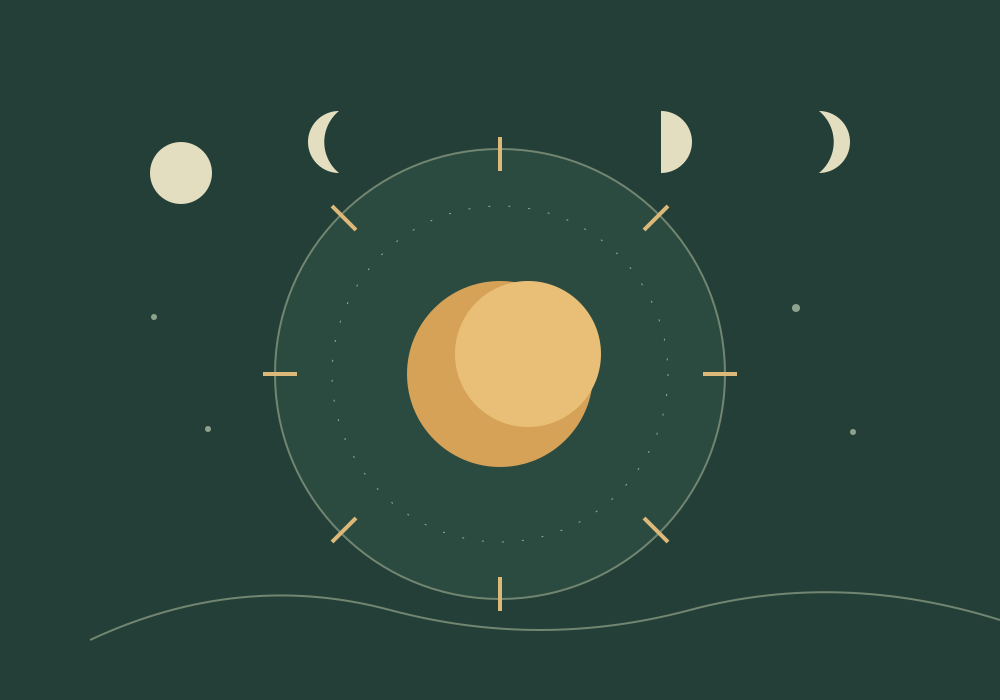
The traditional Chinese calendar is lunisolar: it follows both the Moon and the Sun. Its months begin on days when an astronomical new moon occurs, and they last 29 or 30 days. Calling it a lunar calendar highlights the monthly rhythm, but leaves out the solar framework that keeps the calendar connected with the seasons. In a purely lunar system, months can move through different seasons over time; a lunisolar system adds an adjustment so that this drift does not keep accumulating. [1]
Why an extra month is needed
Twelve lunar months do not fill a whole seasonal year. The Hong Kong Observatory explains that an ordinary Chinese calendar year has twelve months, while a leap year has thirteen. The added unit is an entire leap month, rather than a single extra day like the one familiar from Gregorian leap years. This is the adjustment that lets the monthly and yearly rhythms work together. The Observatory also distinguishes New Year’s Day, the first day of the first Chinese calendar month, from the solar term Beginning of Spring. They serve different calendrical purposes and need not share a date. [2]
A leap month repeats the number of the month before it and is marked as intercalary, or leap. It does not simply become month thirteen at the end of the year. If you are reading a date in a leap year, that extra label matters: an ordinary numbered month and the leap month following it are separate months. [1]
The Sun supplies seasonal markers
The twenty-four solar terms describe stages in the Sun’s annual cycle. UNESCO traces this knowledge system to the Yellow River region, where observations of seasonal change, astronomy, and other natural phenomena helped shape it. It spread more widely and became part of farming, everyday routines, celebrations, and sayings. The terms are therefore useful for understanding both timekeeping and cultural life. Their historical regional setting also matters: a seasonal name is a cultural and calendrical marker, rather than a promise of identical weather in every place where the calendar is used. [3]
Qingming is a solar-term festival
Qingming offers a clear reason to look beyond lunar month numbers. Singapore’s National Heritage Board describes it as beginning at the Qingming solar term and usually falling between 4 and 6 April in the Gregorian calendar. It is associated with remembering ancestors, tending graves, and visiting columbaria. Families may make these visits around the festival rather than only on its exact day. Qingming therefore illustrates two different things: the calendar supplies a seasonal marker, while communities organise their acts of remembrance around it. Its timing is an important exception to the assumption that every traditional Chinese festival follows a fixed lunar month and day. [4]
Checking a festival date
For a particular year, consult a calendar that shows both Chinese and Gregorian dates. Read the festival’s own timing rule, and check for any leap-month label. Keeping those details together makes an unfamiliar calendar much easier to follow.
A couple of questions
Is a Chinese leap month the same as 29 February?
No. It is an additional month in a thirteen-month Chinese calendar year. Gregorian leap years add a day. [2]
Why does Qingming stay near early April?
Its timing follows a solar term, so it stays close to the same part of the solar year rather than a fixed lunar month and day. [4]
Sources & further reading
- Calendars and their History — The Chinese Calendar · NASA Goddard Space Flight Center; L. E. Doggett, Explanatory Supplement to the Astronomical Almanac
- What year is it today? · Hong Kong Observatory
- The Twenty-Four Solar Terms · UNESCO
- Qing Ming Festival · National Heritage Board, Singapore
Customs and interpretations vary. Have a correction or a source to share? Let us know.